






22205 E Bearing in Heavy Industry: Solving Misalignment and High-Load Challenges in 2026
Understanding the Challenge: Shaft Misalignment in Heavy Industry
Heavy industrial operations face persistent challenges that compromise equipment efficiency and lifespan. Among the most significant issues are shaft misalignment and inadequate load distribution in rotating machinery. In sectors such as mining, metallurgy, and bulk material handling, equipment operates under extreme conditions that amplify these problems exponentially.
Shaft misalignment occurs due to multiple factors: thermal expansion from temperature fluctuations, mechanical wear over extended operational periods, installation tolerances that accumulate during assembly, and foundation settling. When misalignment exists, bearing systems experience concentrated stress loads, accelerated wear patterns, and elevated vibration levels. These conditions reduce equipment availability, increase maintenance downtime, and ultimately impact operational profitability.
Traditional fixed-geometry bearings struggle to accommodate even minor deviations from perfect alignment. This limitation has driven industries to seek bearing solutions that provide inherent compensation mechanisms, allowing equipment to function reliably despite real-world imperfections.
The 22205 E Bearing: Self-Aligning Technology for Industrial Demands
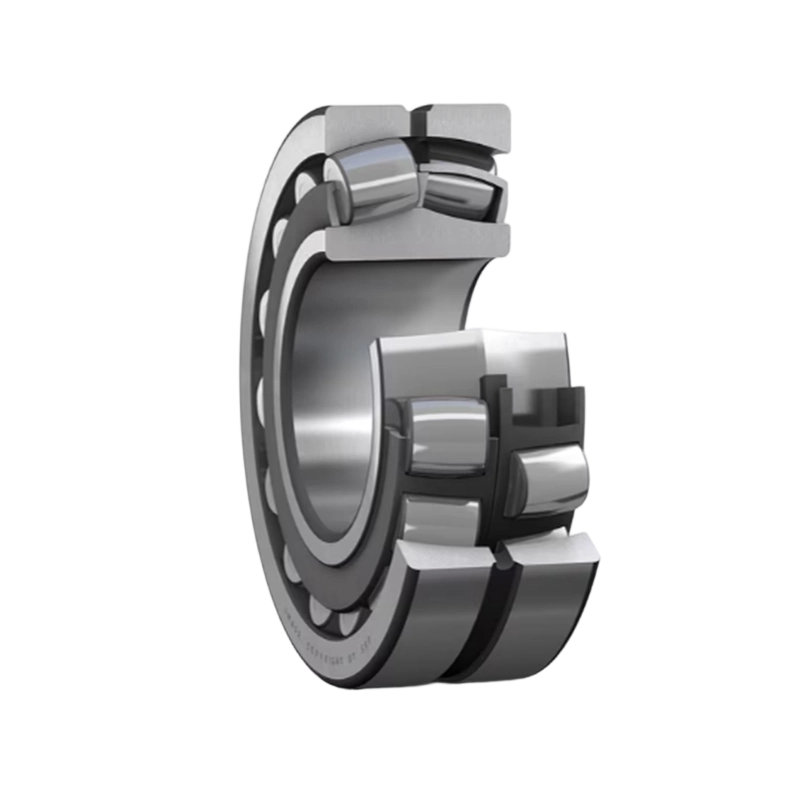
The 22205 E bearing represents a fundamental advancement in bearing design. As a spherical roller bearing variant, it incorporates a distinctive geometry featuring a spherical outer raceway that enables self-aligning capabilities. This engineering approach allows the bearing to automatically adjust to angular misalignment without sacrificing load-carrying capacity.
Self-aligning bearings function through a principle of controlled contact flexibility. The spherical outer race provides a curved surface that permits the inner race assembly to tilt and realign with respect to the shaft axis. This accommodation occurs smoothly and without introducing additional friction penalties that would compromise efficiency.
Core Design Characteristics
- Spherical outer raceway enabling angular misalignment compensation
- Dual-row cylindrical roller configuration optimizing load distribution
- Enhanced dynamic load capacity suitable for intermittent shock loads
- Self-centering properties reducing installation precision requirements
- Robust cage design accommodating thermal variations
22205 E Bearing Dimensions and Specifications
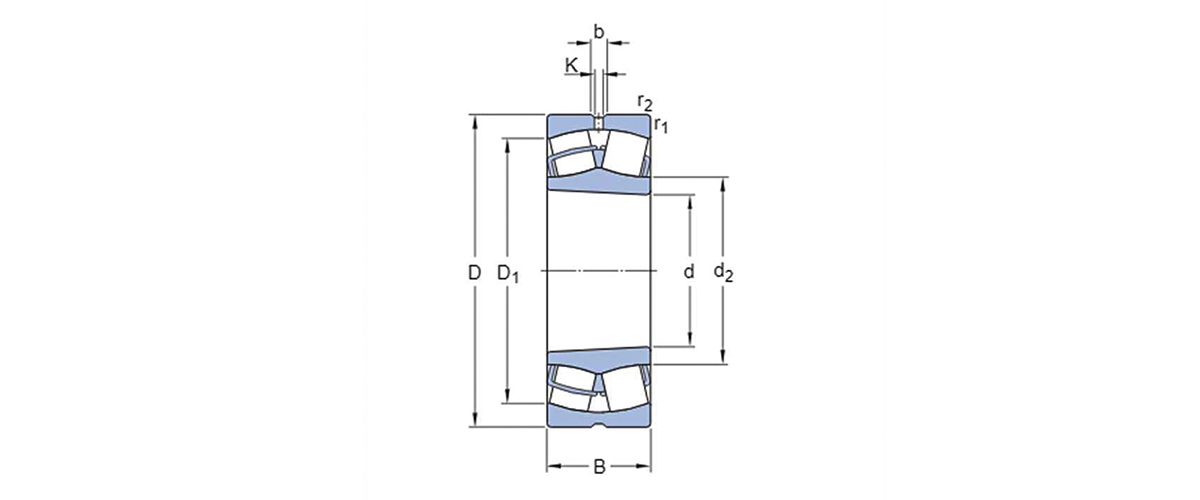
Understanding bearing dimensions proves essential for proper integration into existing equipment frameworks. The 22205 E bearing dimensions follow International Organization for Standardization (ISO) standardization, ensuring compatibility across manufacturers and facilitating straightforward replacement procedures.
| Parameter | Value | Unit |
|---|---|---|
| Bore Diameter (d) | 25 | mm |
| Outer Diameter (D) | 52 | mm |
| Width (B) | 15 | mm |
| Dynamic Load Rating (C) | 59.5 | kN |
| Static Load Rating (C0) | 50.5 | kN |
How Self-Aligning Bearings Compensate for Shaft Deflection
The physics of self-alignment operates on geometric principles that distinguish spherical roller bearings from conventional cylindrical designs. When a shaft experiences deflection or angular displacement, the spherical outer raceway accommodates this deviation by allowing the roller assembly to maintain contact across its full width while adapting to the new angular orientation.
Misalignment Accommodation Mechanisms
In applications involving vibrating screens in aggregation plants, equipment commonly experiences thermal growth during operation. A typical installation might involve a shaft heated by friction to elevated temperatures, causing linear expansion. Standard bearings would experience concentrated stress at specific roller contacts. The self-aligning geometry of spherical roller bearings distributes loads more uniformly, reducing peak stress concentrations and extending operational intervals between maintenance activities.
Angular misalignment tolerance in properly installed spherical roller bearings reaches approximately 2-4 degrees, depending on specific load conditions. This tolerance window proves instrumental in applications where perfect alignment becomes physically impossible or economically impractical to achieve during installation.
Industrial Applications Where 22205 E Bearings Excel
Mining and Extraction Operations
In underground mining facilities, conveyor systems transport bulk materials across distances reaching several kilometers. These conveyor belt bearing 22205 E applications involve infrastructure subject to continuous vibration, variable loading patterns, and difficult installation environments. Traditional bearing selections struggle with these conditions, requiring frequent replacement cycles and extended downtime periods.
Spherical roller bearings adapt to the structural movement inherent in long conveyor runs, compensating for sag and alignment drift without introducing operational penalties. This capability translates to extended bearing service life and reduced total cost of ownership.
Continuous Casting Operations
Metallurgical processes employing continuous casting systems demand bearings capable of withstanding thermal cycling, high-speed rotation, and substantial radial loads simultaneously. In casting machine drive systems, spherical roller bearings maintain operational integrity across temperature swings that exceed 100 degrees Celsius during typical production cycles.
Heavy Machinery and Gearbox Integration
Gearbox systems incorporating spherical roller bearings in their main shafts achieve improved reliability compared to installations using alternative bearing types. The self-aligning properties reduce stress on gearbox housings, decrease noise generation, and improve overall mechanical efficiency.
Technical Advantages of Spherical Roller Bearing Design
Load Distribution Superiority
Cylindrical roller designs concentrate loads along a linear contact line, while spherical roller bearings distribute forces across a broader contact patch. This geometric difference yields meaningful improvements in fatigue resistance and maximum load capacity relative to bearing envelope dimensions.
Vibration Attenuation
The spherical raceway geometry naturally damps vibration transmission through bearing structures. Equipment installations employing these bearings exhibit reduced acoustic signatures and lower dynamic stress transmission to supporting structures.
Maintenance Accessibility
Standardized bearing dimensions facilitate straightforward replacement procedures without requiring extensive equipment disassembly or recalibration. This accessibility characteristic reduces maintenance labor requirements and improves equipment availability during routine service intervals.
Selecting Appropriate 22205 E Bearing Solutions for Your Application
Bearing selection requires systematic evaluation of multiple parameters to ensure optimal performance and economic justification. The following framework guides specification decisions for spherical roller bearing applications.
Load Assessment
- Quantify radial loads during normal and peak operating conditions
- Identify axial load components and their frequency of occurrence
- Account for shock loads and transient load spikes characteristic of your application
- Establish load duty cycles and associated operational schedules
Alignment and Installation Considerations
- Measure existing shaft misalignment using indicator gauges or laser techniques
- Evaluate mounting surface flatness and tolerance stack-up effects
- Assess thermal expansion patterns specific to your equipment configuration
- Consider foundation settling and structural movement over extended operational periods
Environmental Factors
- Document ambient temperature ranges and thermal cycling patterns
- Identify contamination exposure characteristics and sealed versus open bearing requirements
- Evaluate lubricant compatibility and relubrication interval feasibility
- Assess moisture and corrosive media exposure in outdoor or harsh environments
Installation Best Practices for Maximum Bearing Performance
Preparation and Cleanliness
Before installation, thoroughly clean all bearing surfaces, shafts, and housings using appropriate solvents and lint-free materials. Microscopic contamination can accelerate wear and compromise bearing sealing integrity. Establish controlled environments for bearing installation activities to minimize airborne particle exposure.
Mounting Technique
Employ mechanical pressing equipment rather than impact tools to install bearings on shafts. Applied force should target the bearing inner race exclusively, preventing deformation of the outer raceway geometry that would compromise self-aligning capabilities. Heating methods using controlled-temperature oil baths provide alternative installation approaches for larger bearing sizes.
Alignment Verification
While spherical roller bearings accommodate misalignment, initial installation alignment impacts service life and performance. Target initial alignment within 0.5-1.0 millimeter total runout during installation verification activities. This baseline alignment allows the bearing's self-correcting geometry to function optimally while minimizing initial wear patterns.
Lubrication Protocol
Spherical roller bearings require adequate lubricant film thickness to prevent metal-to-metal contact during operation. Establish relubrication schedules based on bearing size, operating speed, and duty cycle characteristics. Monitor lubricant condition periodically to verify cleanliness and detect oxidation or contamination development.
Monitoring and Maintenance Strategies for Extended Service Life
Predictive Maintenance Approaches
Modern industrial facilities employ vibration analysis to detect developing bearing degradation before catastrophic failure occurs. Acceleration-based measurements effectively identify bearing defects, with characteristic frequency signatures enabling early problem identification. Thermal imaging reveals elevated bearing temperatures indicative of lubrication breakdown or excessive friction.
Performance Trending
Establish baseline vibration and temperature measurements immediately after bearing installation and commissioning. Document these baselines systematically, then monitor periodic measurements to identify gradual performance deterioration. Trending approaches provide superior sensitivity compared to fixed alarm thresholds, adapting to equipment-specific characteristics and operational variations.
Condition-Based Replacement
Rather than adhering to fixed replacement intervals, employ condition-based strategies that defer bearing replacement until objective performance indicators warrant intervention. This approach optimizes economic value by extending service intervals where equipment operates favorably, while enabling rapid response when condition monitoring data indicates diminishing performance.
Economic Impact: Total Cost of Ownership Analysis
While spherical roller bearings may command higher initial purchase prices compared to simpler bearing configurations, comprehensive economic analysis reveals favorable long-term value propositions. Extended operational intervals between maintenance activities reduce accumulated labor costs, improve equipment availability percentages, and decrease production disruption impacts.
Cost Comparison Framework
| Cost Category | Conventional Bearings | Spherical Roller Bearings |
|---|---|---|
| Initial Purchase Cost | Lower | Higher |
| Replacement Frequency | Higher | Lower |
| Labor and Downtime Costs | Elevated | Reduced |
| Overall 5-Year Cost | Higher | Lower |
Equipment facilities that implemented spherical roller bearing upgrades in their material handling systems documented average cost reductions of 25-35 percent over five-year evaluation periods. These savings derive primarily from extended operational intervals, reduced emergency maintenance episodes, and improved production continuity.
Comparative Analysis: Spherical Roller Versus Alternative Bearing Types
Spherical Roller Versus Cylindrical Roller Bearings
Cylindrical roller bearings provide excellent performance in applications with perfect alignment and pure radial loading. However, they demonstrate limited tolerance for misalignment and cannot accommodate angular deviation without accelerated wear. Spherical roller bearings sacrifice minimal efficiency compared to cylindrical designs while providing substantially improved alignment tolerance and enhanced shock load capacity.
Spherical Roller Versus Ball Bearings
Smaller-bore applications frequently employ ball bearings due to economic considerations and established supply chains. Ball bearings accommodate misalignment through compliance mechanisms inherent in their rolling element geometry, but they cannot match the radial load capacity available from equivalent-sized spherical roller designs. Heavy industrial applications consistently favor spherical roller technology where load magnitudes exceed ball bearing load ratings.
Spherical Roller Versus Tapered Roller Bearings
Tapered roller bearings excel in applications requiring substantial axial load capacity and precise load control. However, they demand precise installation alignment and preload calibration to achieve optimal performance. Spherical roller bearings provide superior tolerance for imperfect installation while delivering comparable or superior radial load capacity in most heavy industrial configurations.
Frequently Asked Questions About Spherical Roller Bearings
Q1: What maximum misalignment angle can a 22205 E bearing accommodate?
Standard spherical roller bearings tolerate angular misalignment up to approximately 2-4 degrees depending on load magnitude and operating speed. Higher loads and increased rotational speeds reduce the permissible misalignment window. Consult bearing manufacturer technical documentation for your specific operating conditions to confirm tolerance specifications.
Q2: How frequently should spherical roller bearings receive lubrication?
Relubrication intervals vary based on bearing size, operating temperature, and duty cycle characteristics. Typical intervals range from several weeks for high-speed applications to several months for low-speed installations. Establish intervals based on bearing size and operating conditions using bearing manufacturer guidelines, then adjust based on condition monitoring observations.
Q3: Can spherical roller bearings replace failed cylindrical roller bearings without equipment modification?
In many cases, spherical roller bearings install into existing mounting locations designed for cylindrical roller bearings, provided bore diameters and mounting interfaces match. However, verify outer diameter and width specifications carefully to ensure housing compatibility. Consult bearing specifications and equipment documentation before performing bearing type changes.
Q4: What factors cause premature spherical roller bearing failure?
Common failure modes include inadequate lubrication, contamination ingestion, excessive misalignment exceeding design tolerance, overloading beyond rated capacity, and corrosion from moisture exposure. Proper installation, routine maintenance, and condition monitoring identify developing problems before catastrophic failure occurs.
Q5: How do temperature fluctuations affect spherical roller bearing performance?
Elevated temperatures reduce lubricant viscosity, potentially compromising film thickness and increasing friction. Extremely low temperatures increase lubricant viscosity, elevating startup resistance. Thermal cycling accelerates cage wear and can induce subtle misalignment through differential expansion rates. Monitor temperature trends and adjust relubrication frequency based on thermal environment changes.
Q6: What installation environment conditions are necessary for optimal bearing performance?
Clean, controlled-temperature environments improve bearing installation outcomes. Dust and contamination ingestion occurs readily during installation procedures, compromising early service life. Temperature stability prevents thermal stress development during initial operation. While perfect conditions prove impractical in many industrial settings, minimizing contamination through procedural discipline substantially improves reliability outcomes.
Q7: Are spherical roller bearings suitable for high-speed applications?
Spherical roller bearings operate effectively at moderate speeds common in heavy industrial applications. Maximum speed ratings depend on bearing size and load magnitude. Consult bearing specifications for rated speed limits specific to your bearing size and application load profile. For extremely high-speed applications, alternative bearing configurations may prove more appropriate.
Q8: How does bearing preload affect spherical roller bearing performance?
Spherical roller bearings typically operate with minimal preload compared to tapered roller designs. Excessive preload elevates friction, increases temperature generation, and reduces bearing life. Proper installation and alignment typically produce self-supporting contact without requiring additional preload mechanisms.


